
Finding Your Fit: What Keto, Paleo, and Balanced Eating Actually Mean for You
Every year, a new diet trend dominates the headlines. From low-carb keto regimes to ancestral paleo eating, navigating the sheer volume of nutritional advice can leave anyone feeling overwhelmed—and hungry.
Understanding how these popular eating styles work is the first step toward making informed choices for your lifestyle.
The Keto Approach: Shift to Fats The ketogenic diet focuses on drastically reducing carbohydrate intake and replacing it with healthy fats. The goal is to encourage the body to use fat as its primary energy source instead of carbohydrates.
- Common foods: Avocado, eggs, nuts, olive oil, and leafy greens.
- Best suited for: People looking for a structured, low-carb routine with defined dietary boundaries.
The Paleo Approach: Whole Foods Focus Often called the “caveman diet,” Paleo emphasizes minimally processed foods similar to what our hunter-gatherer ancestors might have eaten. It excludes grains, legumes, refined sugar, and dairy.
- Common foods: Lean meats, fish, fruits, vegetables, seeds, and nuts.
- Best suited for: Anyone wanting to cut out ultra-processed foods and focus on whole, nutrient-dense ingredients.
Recognizing Real Hunger vs. Trend Fatigue When trying any new diet, it is easy to mistake caloric restriction or extreme elimination for sustainable health. Feeling constantly fatigued or overly hungry is often a sign that a plan is too restrictive.
Building a Sustainable Eating Plan Rather than strictly adhering to a label, long-term wellness usually comes down to balance:
- Prioritize whole, nutrient-rich foods over heavily processed alternatives.
- Focus on adequate protein, fiber, and healthy fats to maintain steady energy.
- Listen to your body’s hunger cues rather than following overly rigid eating windows.
Note: Always consult a certified nutritionist or healthcare professional before making major changes to your daily diet.
Sustainable Eating Strategies: Comparing the Mediterranean Diet, Time-Restricted Eating, and Phased Nutrition Plans
Choosing a long-term nutritional framework can feel overwhelming when new eating trends emerge constantly. From cutting entire nutrient groups to adopting specialized eating windows, evaluating how these popular strategies compare is essential for building a sustainable, health-focused lifestyle.
Below, we analyze four widely discussed dietary approaches—examining their structure, flexibility, and real-world viability.
The Mediterranean Pattern: The Benchmark for Long-Term Wellness
While many eating strategies function as short-term habits, the Mediterranean dietary pattern serves as a flexible, lifelong framework. Widely studied across nutritional science, this approach prioritizes foundational health and overall balance over strict calorie or carbohydrate elimination.
| MEDITERRANEAN DIET CORE COMPONENTS | |
| Healthy Fats | Extra virgin olive oil, nuts, seeds, avocados, etc |
| Plant-Based Staples | Vegetables, fruits, legumes, whole grains |
| Lean & Seafood Proteins | Fish, poultry, moderate dairy, minimal processed meats |
Why It Sustains Long-Term Success
- Comprehensive Nutrition: Includes all major food groups, helping prevent micronutrient deficiencies.
- Flexible Guidelines: Avoids rigid elimination rules, making social dining and daily meal planning easy to maintain.
- Proactive Wellness: Focuses on overall vitality rather than rapid, short-term transformations.
Time-Restricted Eating: Schedule-Based Nutrition
Time-restricted eating (often referred to as intermittent fasting) shifts the focus from what you eat to when you consume meals. Rather than tracking individual nutrients or measuring portion sizes, this approach structures daily meals within a specific hourly window.
Common Fasting Schedules
- 16/8 Method: Fasting for 16 hours daily with an 8-hour eating window (e.g., 12:00 PM to 8:00 PM).
- 14/10 Method: A moderate approach offering a 10-hour eating window, often easier for beginners.
| Time Window | Phase | Allowed Intake & Guidelines |
| 8:00 AM- 12:00 PM | Fasting Phase | Water, plain tea, and black coffee only. No calories |
| 12:00 PM 8: 00 PM | Eating | Balanced meals, nutrient-dense foods and healthy snacks |
| 8:00 PM – 8:00 AM | Overnight Fast | Strict fasting window spanning through your sleeping hours |
Key Considerations
While scheduling simplicity reduces daily decision fatigue, overall food quality remains vital. Maintaining adequate nutrient intake within the designated window is necessary to support consistent daily energy.

Navigating Restrictive Frameworks: Paleo, Low-Carb, and Beyond
Many popular nutritional approaches rely on restricting specific food groups to achieve fast shifts in daily calorie intake. However, highly restrictive models often present long-term adherence challenges.
| Strategy | Excluded Food Groups | Primary Nutritional Focus |
| Paleo Framework | Grains, dairy, legumes | Whole meats, fish, seed, nuts |
| Ketogenic Pattern | High-card foods, most fruit | High Fat, moderate protein |
Potential Obstacles of High Restriction
- Nutritional Gaps: Excluding whole grains or dairy can reduce total dietary fiber and calcium intake.
- Adherence Fatigue: Strict ingredient checks often increase mental effort, leading to frequent restarts.
- Energy Fluctuations: Abrupt changes in macronutrient ratios can cause temporary fatigue during the adjustment phase.
Phased Nutrition Protocols: Structure vs. Long-Term Maintenance
Certain nutrition programs rely on multi-phase structures designed to transition users from severe restriction toward eventual maintenance.
- Phased Juice Protocols (e.g., Sirtfood Style): These programs typically begin with an initial high-restriction phase reliant on polyphenol-rich liquids, followed by a gradual increase in solid food.
- Structured Carbohydrate Reintroduction (e.g., Modified Low-Carb): Multi-stage protocols start with extreme carbohydrate restriction before systematically reintroducing small amounts of complex carbohydrates over several weeks.
While structured phases offer clear daily instructions, long-term success ultimately depends on what happens after the final phase ends. Transitioning to an adaptable, balanced eating strategy remains the most effective step for lifelong wellness.
Health Disclaimer: This article is for informational purposes only and does not constitute medical advice. Consult a qualified healthcare professional or registered dietitian before starting any new dietary program.
Spotting Restrictive Nutrition Patterns: How to Build a Sustainable Lifestyle
Starting a new nutrition plan only to abandon it a few weeks later is a common experience. Short-term, highly restrictive eating strategies—often referred to as fad plans—are typically designed for rapid, temporary results rather than lifelong habits.
If a program feels like a countdown until you can return to normal meals, it is likely a temporary restriction rather than a long-term lifestyle solution.
Three Red Flags of an Unsustainable Eating Plan
Evaluating a new nutrition strategy before committing your time and effort can help you avoid common obstacles. Watch for these three primary red flags:
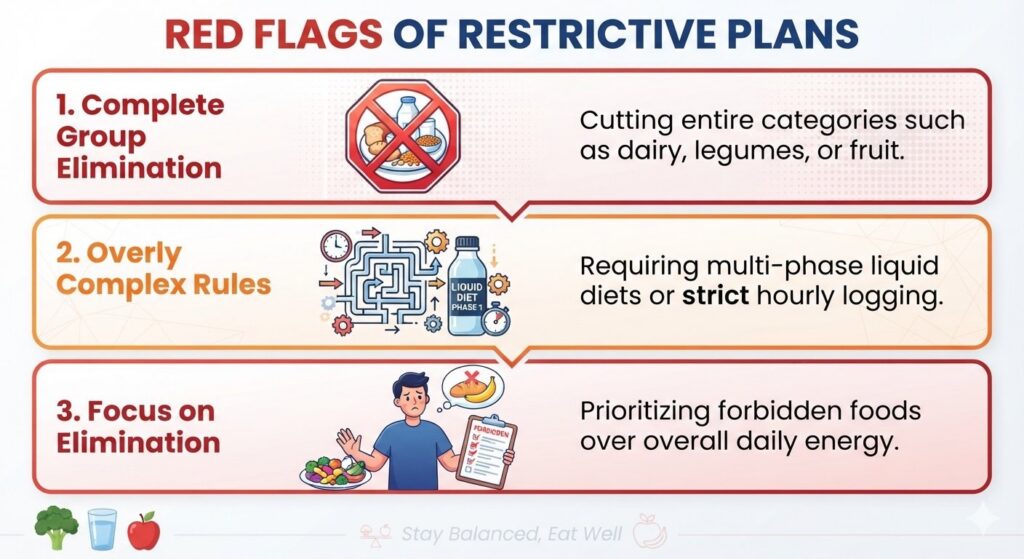
1. Eliminating Entire Food Groups
Plans that completely remove wholesome options—such as grains, fruits, or legumes—often create nutritional gaps. Over time, eliminating major categories can reduce essential fiber, vitamin, and mineral intake.
2. Excessive Protocol Complexity
Programs requiring rigid multi-phase juice routines or constant ingredient checks often add unnecessary friction to daily schedules. If a plan requires hours of daily prep to follow during a normal work week, adherence naturally declines.
3. Rule-Based Eating Over Body Cues
Plans that prioritize strict compliance over how you actually feel often lead to early fatigue. Sustainable progress relies on nourishment and energy balance, not rigid dietary penalties.
Transitioning from Short-Term Plans to Lifelong Wellness
Building long-term health involves shifting focus from what to eliminate to what to include.
Rather than viewing meals as a test of willpower, well-researched models like the Mediterranean pattern focus on abundance—adding healthy fats, vegetables, lean proteins, and whole grains.
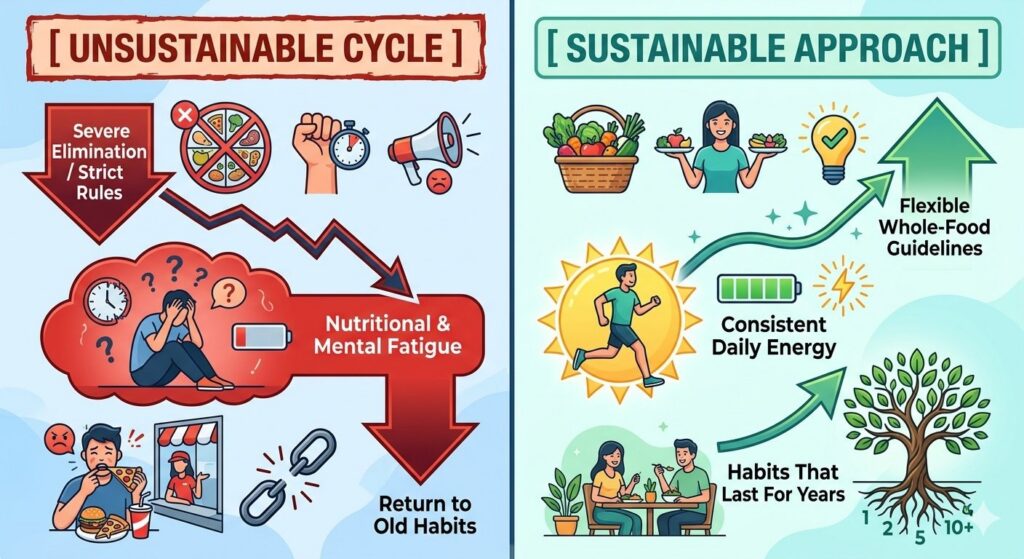
Before adopting any new strategy, ask yourself: “Can I see myself maintaining these basic principles two years from now?” If the answer is no, a more flexible and balanced alternative is ideal.
Frequently Asked Questions
Is the ketogenic approach suitable for everyone?
No. Because ketogenic eating requires extreme carbohydrate restriction, it alters standard metabolic processes. While it can serve specific clinical purposes under medical supervision, eliminating whole fruits and grains without professional oversight can increase the risk of micronutrient deficiencies.
Why do short-term diets often fail over time?
Most trend-focused diets rely on severe restriction to achieve fast initial results. Because these guidelines are difficult to maintain alongside regular social and family routines, individuals frequently return to old habits once the program ends. Sustainable options focus on gradual habit formation rather than complete overhauls.
What distinguishes a temporary trend from a true lifestyle change?
A temporary diet focuses on rigid, short-term elimination to meet a brief goal. A lifestyle change emphasizes flexible, long-term habits—such as incorporating whole foods and prioritizing fiber—that support continuous vitality without feeling restrictive.
Is time-restricted eating practical for busy schedules?
Yes. Many individuals find time-restricted eating (intermittent fasting) easier to maintain than standard calorie-tracking because it regulates when meals occur rather than dictating every ingredient. Aligning an 8-hour eating window with your existing workday can simplify meal planning.
Conclusion: Sustainable Progress Over Quick Fixes
Whether evaluating ketogenic frameworks, historical paleo concepts, or time-restricted windows, long-term wellness ultimately relies on balance and consistency. Highly restrictive plans may offer brief initial changes, but adaptable frameworks like the Mediterranean model provide the staying power needed for lasting health.
Your path forward does not require a dramatic kitchen overhaul. By focusing on whole, nutrient-dense foods and choosing guidelines that fit your actual daily routine, you can build a sustainable lifestyle that supports your goals for years to come.
Health Disclaimer: This material is for educational purposes only and does not replace medical advice. Always consult a certified healthcare professional or registered dietitian before making significant changes to your nutrition plan.