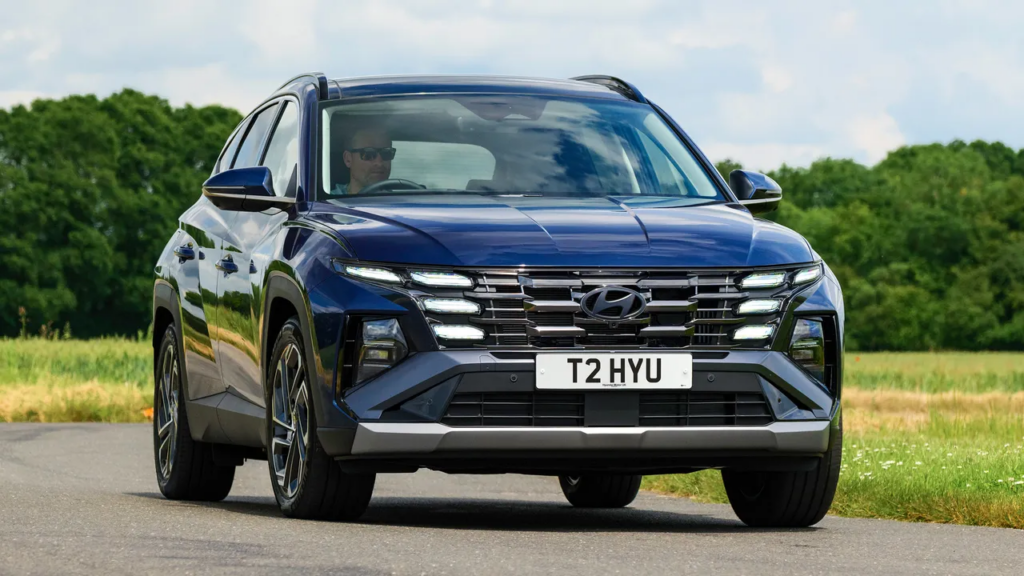
Most car buying advice stops at the purchase price, which is the one cost you negotiate once and then stop thinking about. Everything after it — insurance, fuel, servicing, depreciation — is what you actually live with. The Hyundai Tucson is a useful example because it sits in the compact SUV segment where those running costs are moderate and predictable enough to estimate properly before you sign anything.
Table of Contents
- What the Tucson is
- The five costs of ownership
- What actually moves your insurance premium
- Estimating your own numbers before you buy
What the Tucson Is
The Tucson is a compact SUV aimed at daily commuting and family use: usable cargo space without a full-size footprint, and easier to park than the segment above it. Specifications vary considerably by model year and trim, so treat the following as the shape of the range rather than a spec sheet for any particular car.
- Powertrains: conventional four-cylinder engines through to hybrid options. The hybrid costs more up front and returns it through fuel economy, which means the break-even depends entirely on your annual mileage.
- Driver assistance: lane keeping assist, forward collision-avoidance assist and adaptive cruise control are available, but availability varies by trim. Confirm what is fitted to the specific car, not what the brochure lists for the range.
- Infotainment: recent model years include touchscreen systems with Apple CarPlay and Android Auto support.
The Five Costs of Ownership
Budget for all five, not just the first. Ranked roughly by how much people underestimate them:
| Cost | What to know |
| Depreciation | Usually the single largest cost of owning a new car, and the one that never appears on a bill. It is also the reason a two-or-three-year-old example of the same car can be substantially better value. |
| Insurance | Varies more between insurers than between cars. See the section below. |
| Fuel | Driven by your actual mileage and the powertrain you choose. Work from your own annual miles, not an average. |
| Maintenance | Scheduled servicing, tyres and brakes. Wear items are not covered by warranty, and tyres on a compact SUV are not cheap. |
| Financing | Interest over the term. A longer term lowers the monthly payment and raises the total paid, sometimes considerably. |
Hyundai’s warranty coverage is comparatively long, which shifts some repair risk off the owner during the covered period — worth factoring in, but it does not cover wear items.
What Actually Moves Your Insurance Premium
A point worth being blunt about: for most buyers, who you are matters more to your premium than which compact SUV you pick. Insurers price the driver at least as heavily as the vehicle, which is why a quoted “average premium for this model” you find online is close to useless for your own budgeting.
| Factor | Effect |
| Driver profile | Age, claims history, annual mileage and — where state law permits it — credit-based insurance scores. Normally the heaviest single input. |
| Location | Traffic density, local theft rates and weather risk. The same driver and car can differ substantially between two adjacent states. |
| Trim and MSRP | Higher trims cost more to repair or replace, which raises collision and comprehensive premiums. |
| Safety equipment | Anti-theft systems and crash-avoidance features can attract discounts, but which features qualify differs by insurer. Ask specifically. |
The practical consequence is that shopping insurers matters more than shopping models. Quotes for identical cover on an identical car routinely vary by a wide margin between carriers.
Estimating Your Own Numbers Before You Buy
- Get real quotes on the exact car. Use the VIN or the precise trim, from several licensed insurers, before you commit to the purchase. A quote on “a Tucson” is not a quote on your Tucson.
- Check the crash ratings yourself. IIHS and NHTSA publish ratings by model year, free. Ratings vary between years of the same model, so check the year you are buying.
- Run the fuel maths on your mileage. Use the EPA’s published figures and your own annual miles to decide whether the hybrid premium pays back within the time you intend to keep the car.
- Test drive the specific trim. Equipment differs enough between trims that a drive in one tells you little about another.
- Price the used alternative. Compare the total cost of a new car against a two-or-three-year-old equivalent. Depreciation has already been paid on the latter.
How We Sourced This Article
This is a general guide to estimating ownership costs, not a road test. We have not driven the Tucson, and we do not publish specific premium or running-cost figures because both depend on the individual buyer, their location and the exact vehicle — any single number we printed would be wrong for almost everyone reading it. Use the regulator and manufacturer sources below to check the specifications for the model year you are considering. We have no commercial relationship with Hyundai, any dealer, or any insurer.
Where to verify:
- IIHS — vehicle safety ratings by model and year
- NHTSA — 5-Star Safety Ratings and recall lookup
- FuelEconomy.gov — official EPA fuel economy figures
- Hyundai — official Tucson specifications and trim details
Corrections and clarifications: if you spot an error in this article, please contact us and we will correct it and record the change.