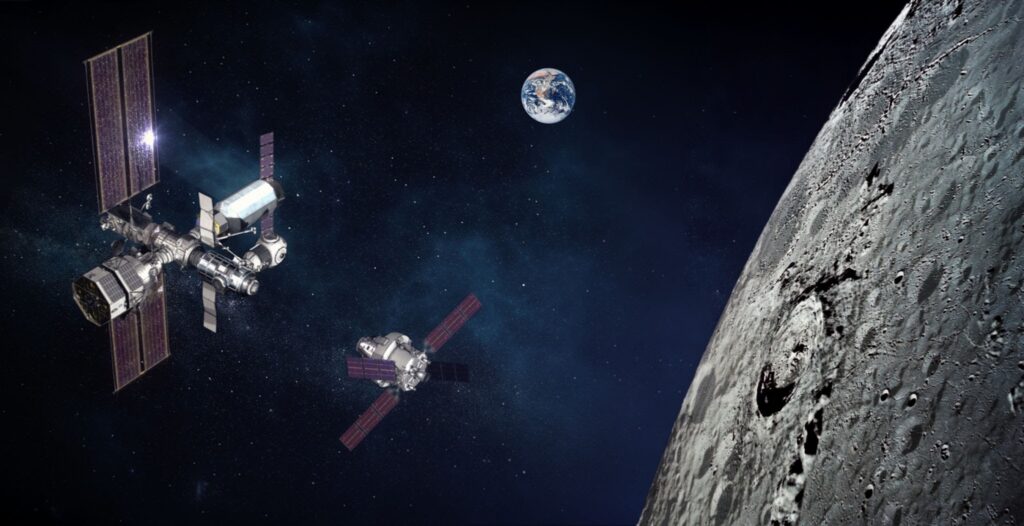
More than half a century after the last Apollo astronaut left a footprint in the lunar dust, humanity has crossed a major threshold in deep space exploration. NASA’s Artemis program—a coalition uniting international space agencies and commercial partners—is driving a global surge of interest as crewed lunar flight becomes a routine reality once again.
Unlike the “flags and footprints” missions of the 1960s, Artemis is built around a fundamentally different vision: establishing a sustainable human presence on the Moon while validating the critical, long-duration life support systems required for crewed journeys to Mars.
A New Era in Human Spaceflight
The Artemis program represents a paradigm shift in exploration, defined by international cooperation, reusable surface architecture, and targeted science at the lunar poles.
- Proving Flight Hardware: Crewed test flights aboard the Orion spacecraft—including successful circumlunar loops around the Moon—have rigorously tested crew life support, deep-space navigation, and high-velocity re-entry heat shields under real flight conditions.
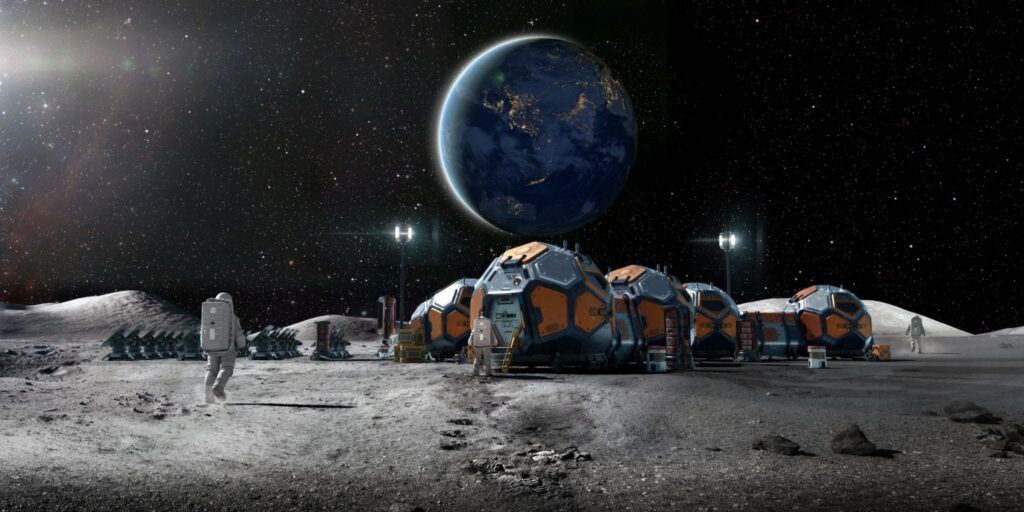
- The Lunar South Pole Target: Future surface missions are targeted at the lunar South Pole, an unmapped terrain featuring permanently shadowed craters rich in water ice—a crucial raw material for life support and local rocket propellant production.
These missions establish the groundwork for permanent infrastructure, including the orbiting Lunar Gateway station and long-duration surface habitats designed to support multi-week stays.
Proving Ground: Closed-Loop Environmental Systems
Operating roughly 384,000 kilometers from Earth leaves zero margin for error. Without the quick supply chain typical of low Earth orbit, space agencies rely on closed-loop Environmental Control and Life Support Systems (ECLSS) that recycle air and water with extreme efficiency.
1. Carbon Dioxide Removal and Air Regeneration
Traditional spacecraft relied on consumable lithium hydroxide canisters to trap carbon dioxide. Artemis life support relies on regenerable amine systems and temperature swing adsorption. These systems continuously scrub CO₂ from cabin air and recycle oxygen back into the habitat, drastically reducing launch weight demands.
2. High-Efficiency Water Reclamation
Water is among the heaviest consumables to launch from Earth. Deep-space habitats and vehicles use advanced catalytic oxidation and multi-stage distillation to process atmospheric humidity, sweat, and wastewater into ultra-pure drinking water. Target recovery rates now reach beyond 98%, making closed-loop living a practical reality.
3. Radiation and Thermal Shielding
Far beyond the protective bubble of Earth’s magnetosphere, deep-space habitats must withstand intense thermal swings—ranging from 120∘C (250∘F) in direct sunlight to −130∘C (−200∘F) in the shade—alongside solar particle events. Modern crew modules feature active liquid thermal loops and specialized hydrogen-rich shielding walls to keep living areas safe and temperate.
Comparing Space Environments: Earth Orbit vs. Moon vs. Mars
| Exploration Variable | Low Earth Orbit (ISS) | Lunar Surface (Artemis) | Red Planet (Mars Mission) |
| Distance from Earth | ~400 km | ~384,000 km | ~225,000,000 km |
| Signal Delay | Real-time (<0.1 seconds) | ~1.3 seconds | Up to 20 minutes each way |
| Resupply Capability | Every few months | Scheduled lunar missions | Self-sufficient for 2–3 years |
| Radiation Exposure | Shielded by Earth’s magnetic field | Direct deep-space solar and cosmic exposure | Extended transit and surface cosmic radiation |
| Primary Goal | Microgravity research and technology runs | Long-term surface base and ice harvesting | Interplanetary human habitation |
The Highway to Mars
Every hardware component refined for the Artemis program—from modern spacesuits to automated water purifiers—serves a double purpose. By using the Moon as an active test bed, space agencies are ensuring that when the first crew departs for Mars, their life support systems will have thousands of logged, verified hours in deep space.