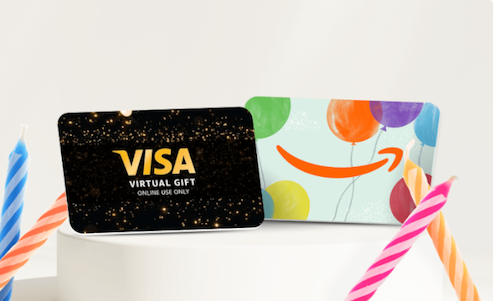
Gift cards occupy an odd position in consumer finance. They are treated casually, like cash, but they are actually a contract with a single company — and the money on them is only as good as that company. Federal law sets a floor of protection, but that floor has gaps worth knowing about before you buy.
Table of Contents
- What federal law guarantees
- Where the protections stop
- Store cards versus network-branded cards
- Buying below face value
- Avoiding gift card scams
1. What Federal Law Guarantees
The Credit CARD Act of 2009 set baseline federal rules for most retail gift cards and general-use prepaid cards. Two provisions matter most:
- Expiry: funds cannot expire less than five years from the date the card was issued, or from the date money was last loaded onto it.
- Dormancy and inactivity fees: these are restricted. A fee for non-use generally cannot be charged unless the card has gone unused for at least a year, and no more than one such fee may be charged per month. Any fees must be clearly disclosed on the card or its packaging.
Several states go further than the federal floor — some prohibit expiry on retail gift cards outright, and some require cash refunds for small remaining balances. State law, where it is stronger, applies in addition to the federal rules.
2. Where the Protections Stop
The federal rules govern expiry and fees. They do not guarantee that you can spend the money.
- Bankruptcy is the real risk. If the issuing retailer enters bankruptcy, gift card holders are unsecured creditors, near the back of the queue. Cards are sometimes honoured during a restructuring and sometimes not, and the decision is not the cardholder’s. This is the single strongest argument against holding a large balance on one retailer’s card for a long time.
- Promotional cards are often exempt. A card you were given as part of a rebate, loyalty reward or promotion frequently falls outside the CARD Act protections and can carry a much shorter expiry.
- Lost cards are usually gone. Unless you registered the card, a retailer is generally under no obligation to replace it.
The practical conclusion is simple: treat a gift card as money to be spent soon, not money to be stored.
3. Store Cards Versus Network-Branded Cards
The distinction between a single-retailer card and a Visa, Mastercard or American Express gift card changes the economics considerably.
| Factor | Single-retailer card | Network-branded card |
| Purchase fee | Normally none | Commonly a few dollars per card |
| Where it works | One retailer or group | Almost anywhere that takes the network |
| Bankruptcy exposure | Tied to that one retailer | Tied to the card issuer, not a shop |
| Awkward balances | Usually spendable in-store | Small residual balances are often hard to use |
Network-branded cards buy flexibility and pay for it with an up-front fee. Store cards are free but concentrate the risk in a single company.
4. Buying Below Face Value
Gift cards are one of the few consumer products routinely available for less than they are worth:
- Warehouse clubs. Costco and Sam’s Club regularly sell restaurant and retail multipacks at a discount to face value. The discount is real, but it is normally sold in fixed denominations you cannot break up.
- Credit card reward portals. Points often redeem at a better rate against gift cards than against statement credit. Compare the cents-per-point rate before assuming it is a good deal — sometimes it is worse.
- Supermarket fuel and bonus promotions. Many chains attach fuel points or instant discounts to third-party gift card purchases.
- Gift card resale marketplaces. These sell unwanted cards at a discount. Buy only from a marketplace offering a balance guarantee, because a resold card whose balance has already been drained is a common fraud, and recovery without that guarantee is difficult.
5. Avoiding Gift Card Scams
Gift cards are the payment method of choice for fraud, because the transfer is fast and effectively irreversible. Two rules cover most of the risk:
- No legitimate organisation asks to be paid in gift cards. Not a tax authority, not a utility, not law enforcement, not a company’s technical support line. A request to pay a bill or a fine with gift card numbers is a scam without exception.
- Inspect the packaging in-store. Tampered cards — with scratched-off PIN covers or resealed packaging — are placed on display racks so the thief can drain the balance once it is activated. Cards from behind the counter are safer.
If you have paid a scammer with a gift card, contact the card issuer immediately. Funds are occasionally recoverable if the card has not yet been spent, and the issuer can sometimes freeze it.
How We Sourced This Article
This article summarises published federal consumer-protection rules and regulator guidance. It is general information, not financial or legal advice, and state law varies — check the rules for your own state, and read the terms printed on any card before buying. We have not been paid by, and have no commercial relationship with, any retailer or card issuer named here.
Primary sources:
- Federal Trade Commission — Buying and Giving Gift Cards
- Consumer Financial Protection Bureau — rules for gift cards
- Federal Trade Commission — What to Know About Gift Card Scams
Corrections and clarifications: if you spot an error in this article, please contact us and we will correct it and record the change.